Bur Oak
Bur Oak
Couldn't load pickup availability
Bur Oak is a hardy, long-lived native tree with distinctive lobed foliage, thick corky bark, and a broad, spreading form. It is highly adaptable, growing in a wide range of soils and moisture conditions, from dry sandy sites to rich, moist soils. It performs best in full sun and develops a deep root system that helps it tolerate drought once established. Bur Oak is also exceptionally cold hardy and can withstand challenging growing conditions.
Native to southern Saskatchewan and Manitoba as well as eastern Canada, Bur Oak is the most northern-growing of all oak species, a distinction that makes it invaluable for prairie gardeners and northern landscapes. Its exceptional cold tolerance and proven performance in regions beyond its natural range make it an outstanding choice for expanding oak cultivation further north, where few other oak species will thrive.
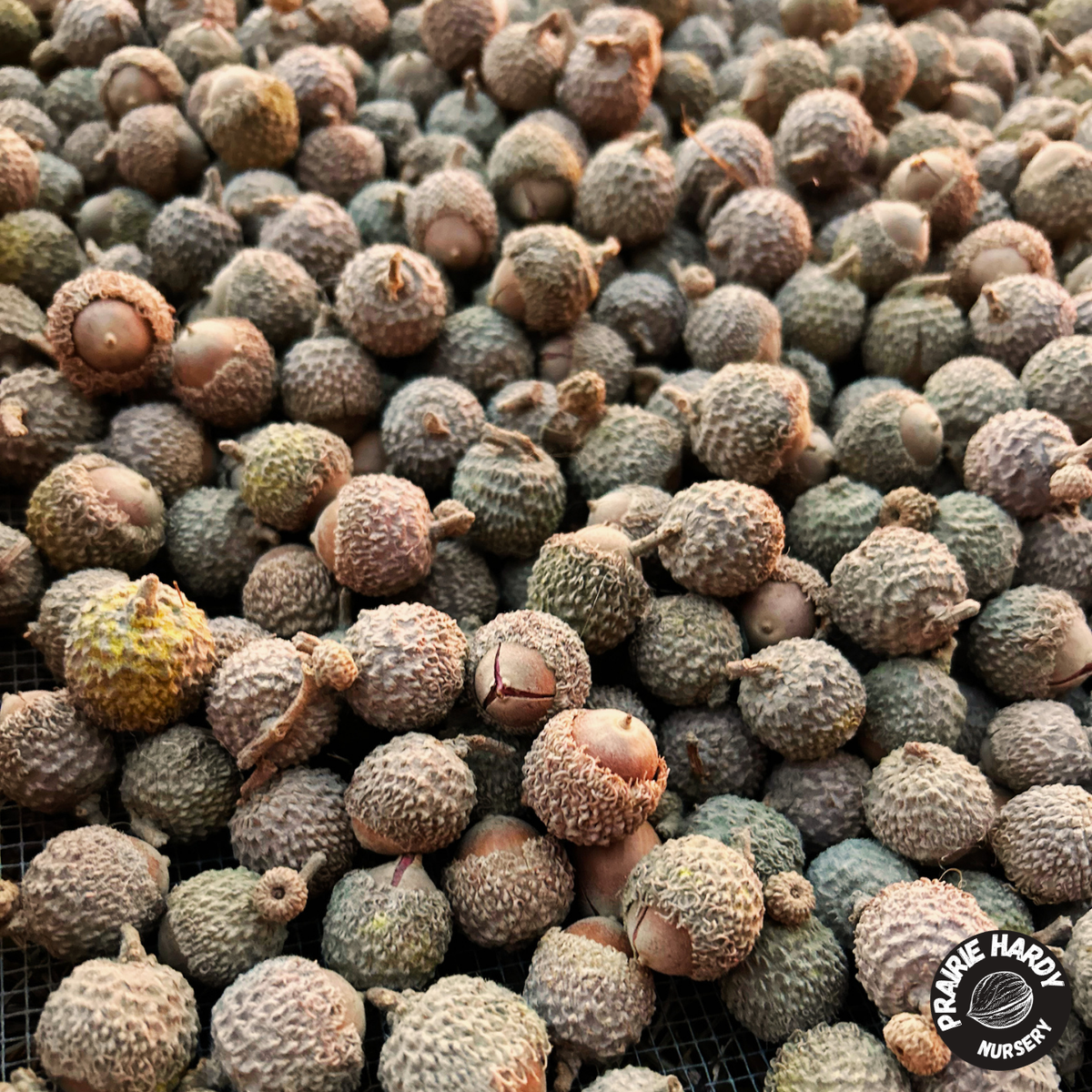
The large acorns are one of the most distinctive features of Bur Oak, with a deep, fringed cup that gives the tree its name. They grow up to 4 cm (1.2") long with an oblong form. Ripening begins in early fall and are an important food source for squirrels, deer, birds, and many other wildlife species. Bur Oak acorns are relatively mild compared to many other oak species and can be eaten by people after proper preparation, including roasting, boiling, or processing into flour. Bur Oaks can be implemented in silvoculture and forage crops for livestock.
Bur Oak is a slow-growing tree, but its longevity makes it an excellent long-term addition to the landscape. Mature trees can develop a massive trunk and broad canopy, while trees growing on dry or shallow soils may remain smaller and develop a more rugged, gnarled form. It is an excellent choice for wildlife plantings, shelterbelts, naturalized landscapes, and large properties.
Hardiness Zone: 2
Height at Maturity: 15 meters (50 feet)
Spread: 8 meters (28 feet)
Soil Preference: Well drained
Light Exposure: Full sun
Pollination: Self-fertile (Planting multiple trees may improve fruit set)
Latin Name: Quercus macrocarpa
Share